Reinforce Adjoint Matching
Scaling RL Post-Training of
Diffusion and Flow-Matching Models
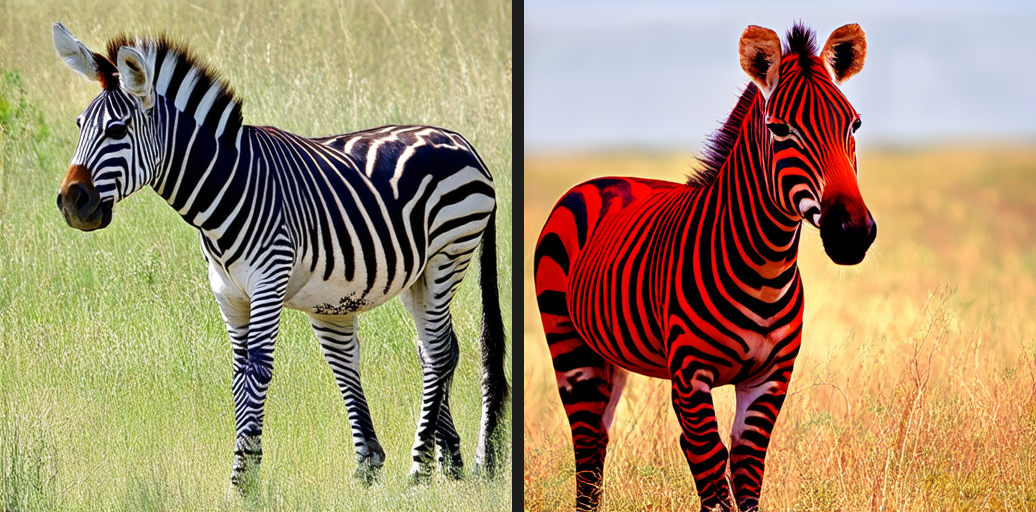
Two ways to learn
There are two ways to acquire a skill. The first is learning from examples: collect samples of others doing the thing and train a model to match the distribution of those samples. The second is learning from outcomes: try something, score the result, and adjust based on the score.
The two regimes have very different ingredients. Learning from examples needs a dataset of good examples. Learning from outcomes needs only a way to score candidate outputs. But it has a catch. If the learner’s attempts are random to begin with, nearly every output is bad and scores carry no useful signal. Learning from outcomes is hopeless without a strong prior that focuses exploration on plausible candidates.
This is how humans learn most skills. We start by copying others, then refine through practice and feedback. Pure imitation never gets you past your teachers; pure trial-and-error never gets off the ground. The same recipe powers today’s reasoning LLMs. They are pretrained on the web, then post-trained with RL against verifier and preference rewards.
Continuous generative modeling
The same recipe should apply to continuous generative modeling. The scope is even broader than the discrete case. Beyond images, video, and 3D, continuous generative models now drive protein structure prediction and design, trajectory generation in robotics, and world models for simulation and planning.
Diffusion and flow-matching models are a fundamental reduction of continuous generative modeling to the simplest supervised learning problem, regression. This mirrors how autoregressive models reduce discrete sequence modeling to classification.
Pretraining a diffusion or flow-matching model is extremely well understood and scales effortlessly: a clean sample is corrupted by Gaussian noise, and a model regresses against a closed-form target. That is the entire training procedure. Post-training, however, has lacked a comparably clean algorithm. Existing methods rely on costly SDE rollouts, reward gradients, or surrogate losses, sacrificing pretraining’s regression structure.
We show that the regression structure of pretraining extends to RL post-training.
Setting up post-training
We have a pretrained diffusion or flow-matching model. In the simplest and now standard case, it is parameterized by a velocity field $v^{\mathrm{ref}}$. Starting from Gaussian noise, we integrate $v^{\mathrm{ref}}$ to produce samples $X_0 \sim p^{\mathrm{ref}}$. We also have a scalar reward $r$ that scores samples.
The canonical post-training objective is to maximize expected reward while staying close to the pretrained model in a KL sense,
\[\mathbb E_{x \sim p}[r(x)] \;-\; D_{\mathrm{KL}}(p \,\|\, p^{\mathrm{ref}}).\]The optimum is proportional to $p^{\mathrm{ref}}(x)\exp(r(x))$ and tilts the pretrained distribution toward high-reward samples. We have the pretrained model and the reward, but no samples from this tilted distribution.
Stochastic optimal control casts post-training as a problem on the velocity field: find $v^\ast$ that generates the tilted distribution.
The RAM regression target
From the stochastic optimal control problem we derive a fixed-point equation for the optimal velocity field $v^\ast$. The equation expresses $v^\ast$ at $(t, X_t)$ as a conditional expectation of a target built from an on-policy endpoint $X_0$, its reward $r(X_0)$, and the noise $\epsilon$ that connects $X_0$ to $X_t$. The optimum has a structural property that makes this expectation cheap to estimate: the conditional law $X_t \mid X_0 \sim \mathcal N\bigl((1-t)\,X_0,\, t^2 I\bigr)$ is the same as in pretraining; only the marginal of $X_0$ changes.
So we sample $X_0$ from the current model with any off-the-shelf sampler, sample $\epsilon \sim \mathcal N(0, I)$ and $t \in (0, 1)$ independently, and form $X_t = (1-t)\,X_0 + t\,\epsilon$. RAM minimizes the consistency loss
\[\mathcal L_{\mathrm{RAM}}(\theta) \;=\; \mathbb E\left[\,\Bigl\|v^\theta_t(X_t) \;-\; \mathrm{sg}\left(v^{\mathrm{ref}}_t(X_t) \;+\; r(X_0)\,\bigl((\epsilon - X_0) - v^\theta_t(X_t)\bigr)\right)\Bigr\|^2\,\right],\]where $\mathrm{sg}(\cdot)$ is stop-gradient. The residual $(\epsilon - X_0) - v^\theta_t(X_t)$ is the difference between the pretraining target and the model’s current prediction at $X_t$. High reward pulls the model toward the pretraining target; zero reward leaves it at the reference; low reward pushes it away. The reward enters only as a scalar, so $\nabla r$ is never used. And because $v^{\mathrm{ref}}$ stays in the target throughout training, the model is anchored to the pretrained reference, which is what prevents reward hacking.
Each on-policy endpoint is reused across many $(\epsilon, t)$ draws, amortizing the cost of ODE sampling and reward evaluation. The resulting training states are conditionally independent given the endpoint. That gives more gradient signal per step than SDE-based methods, which produce correlated states from a single rollout.
A training step in code
x0 = ode_sample(model)                     # on-policy endpoint
r  = reward_fn(x0)                         # scalar (no grad)

for _ in range(K):                         # in parallel
    t   = sample_t()                       # random t in (0, 1)
    eps = randn_like(x0)                   # gaussian noise
    xt  = (1 - t) * x0 + t * eps           # analytic noising
    v_hat = model_ref(xt, t) + r * ((eps - x0) - model(xt, t))
    loss  = (model(xt, t) - v_hat.detach()) ** 2
    loss.mean().backward()
Post-training Stable Diffusion 3.5M
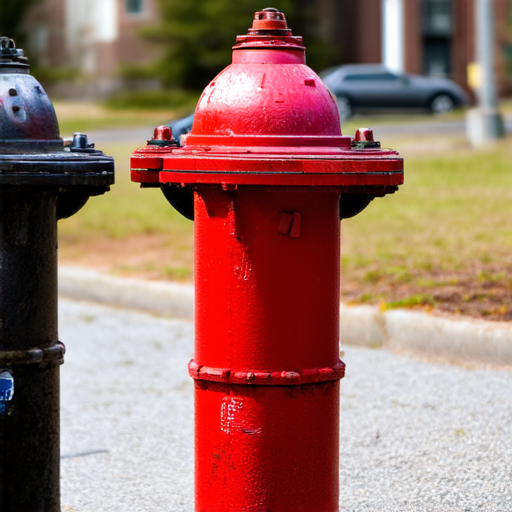
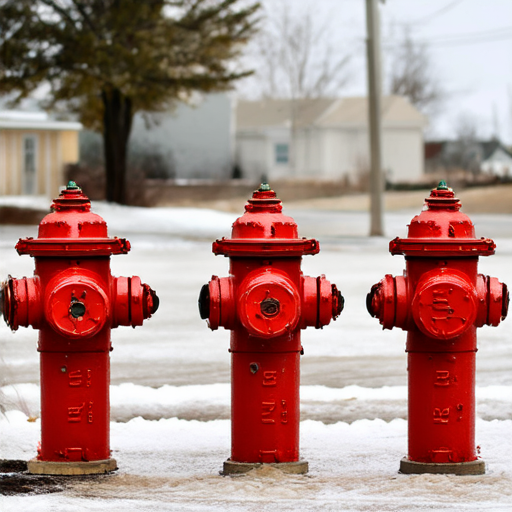
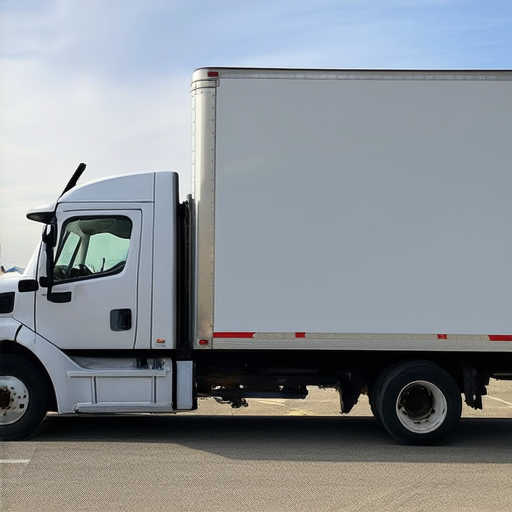
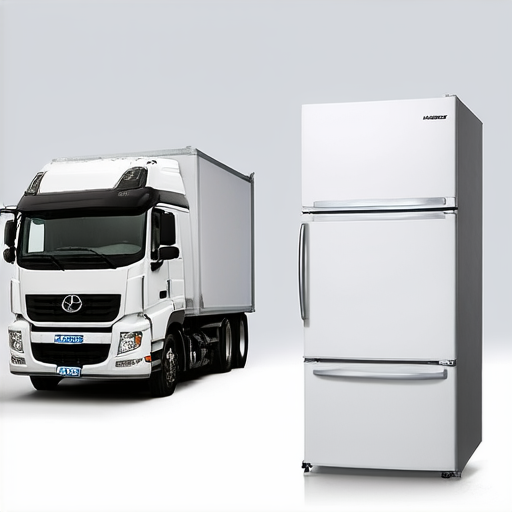
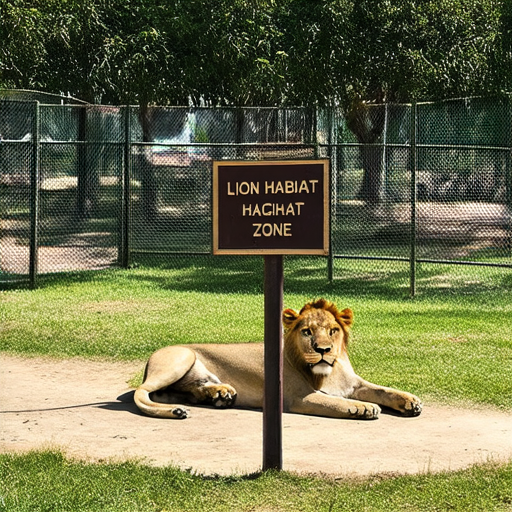
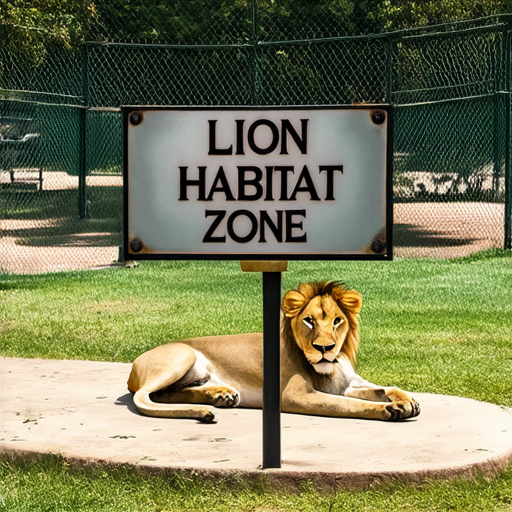
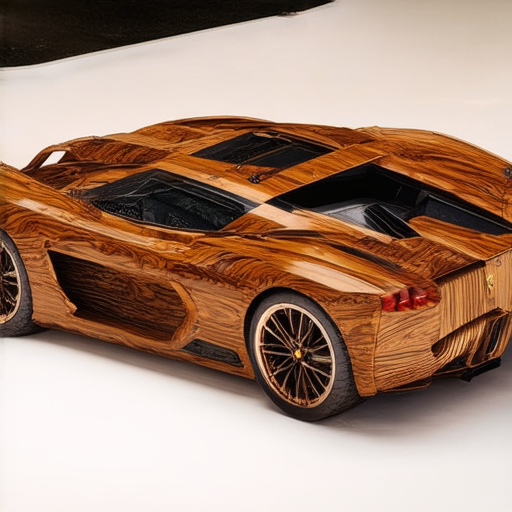
We post-train Stable Diffusion 3.5M on three tasks: compositional generation (GenEval), visual text rendering (OCR), and human-preference alignment (PickScore). RAM achieves the highest reward on each task, without reward hacking or visible quality degradation. It matches Flow-GRPO’s peak reward in 50×, 48×, and 34× fewer training steps, at lower per-step compute cost.





The simple regression that scales pretraining now scales post-training too.